Skip to content
WARRIOR WOMEN PROJECT

Oral History Archive

  • Home
  • Donate
  • Wounded Knee ’7371-day occupation of Wounded Knee on Pine Ridge Reservation, a defining moment of Red Power resistance against U.S. government repression.
  • American Indian Movement (AIM)Grassroots Indigenous rights organization founded in 1968, central to Red Power struggles for sovereignty, self-determination, and justice.
  • Warrior Women ProjectOngoing oral history and media project documenting Native women leaders of the Red Power Movement and their living legacy.
  • Survival SchoolCommunity-founded Indigenous schools created in the 1970s to provide culturally grounded education and protect Native children from state systems.
  • Women of All Red Nations (WARN)Indigenous women’s organization founded in 1978 to confront sterilization abuse, child removal, and issues impacting Native women and families.
  • Women of the Red Power MovementThe leadership, testimonies, and experiences of Indigenous women at the forefront of Red Power activism.
  • Teachings For Our TimesShort clips focusing on lessons in organizing, education and movement work across generations.
  • Occupation of Alcatraz1969–1971 takeover of Alcatraz Island by Indians of All Tribes, marking a turning point in Red Power activism and federal Indian policy.
  • International Indian Treaty Council (IITC)Indigenous-led organization established in 1974 to advocate for treaty rights and sovereignty at the United Nations and on the global stage.
Subscribe

Posts by Lavetta Yeahquo

  • Home
  • Lavetta Yeahquo
About Lavetta Yeahquo
Contemporaneous Network(s) • Active with the American Indian Movement (AIM). • Connected with elders and leaders during the Wounded Knee occupation including Dennis Banks, Russell Means, Madonna Thunder Hawk, Gladys Bissonette, Lorelei Decora (a nurse), Ellen Moves Camp, Grace Black Elk, and “Grandma Sally.” • Part of the Hawkeye Bunker group during the occupation. Life Outline • Raised in Oklahoma, member of the Kiowa Tribe. • Attended Haskell Junior College in Lawrence, Kansas. • Met AIM members while at Haskell, which led to her involvement with the movement. • Traveled to Rapid City and then Pine Ridge following AIM calls to action. • Participated in the 1973 Wounded Knee Occupation at the age of 18-19. • Took on various roles including assisting elders, standing guard, and living in the Hawkeye Bunker. • Continued to serve and advocate for her Kiowa community after the occupation. Involvement in Major Events • Participated in the 1973 Wounded Knee Occupation, one of the key events in 20th-century Native American activism. • Witnessed and survived direct armed conflict, including being under siege and a close-call shooting incident. • Engaged in decision-making spaces as an AIM supporter and part of the physical occupation. Legacy and Influence • Lavetta’s participation in Wounded Knee gave her a lifelong commitment to community service, particularly in helping her Kiowa people. • The experience taught her survival skills, resilience, and strengthened her voice and activism. • She emphasizes the importance of standing for one’s people and being generous and compassionate, values she attributes to her Kiowa upbringing. • The memory and sacrifice of people like Buddy Lamont remain central to her sense of purpose and historical memory. Clusters • Wounded Knee Occupation Participants: Lavetta Yeahquo, Buddy Lamont, Dennis Banks, Russell Means, Madonna Thunder Hawk, Gladys Bissonette, Lorelei Decora, Ellen Moves Camp, Grace Black Elk. • AIM Members and Supporters. • Haskell Indian Nations University Connections. Miscellaneous • Lavetta first met AIM members in a bar near Haskell, drawn by their long hair, braids, and distinctive appearance, which was unusual for men in her community at the time. • She left Haskell without many belongings, traveling with only a pillowcase containing a change of clothes. • She vividly remembers the image of the caravan of car lights traveling to Wounded Knee—a memory that stayed with her. • She survived firefights, lived in rough conditions without proper sanitation, and faced fear but stayed committed to the movement. • Her time at Wounded Knee left her with a strong will to support and defend her people, fostering a sense of service that continued into her later life.
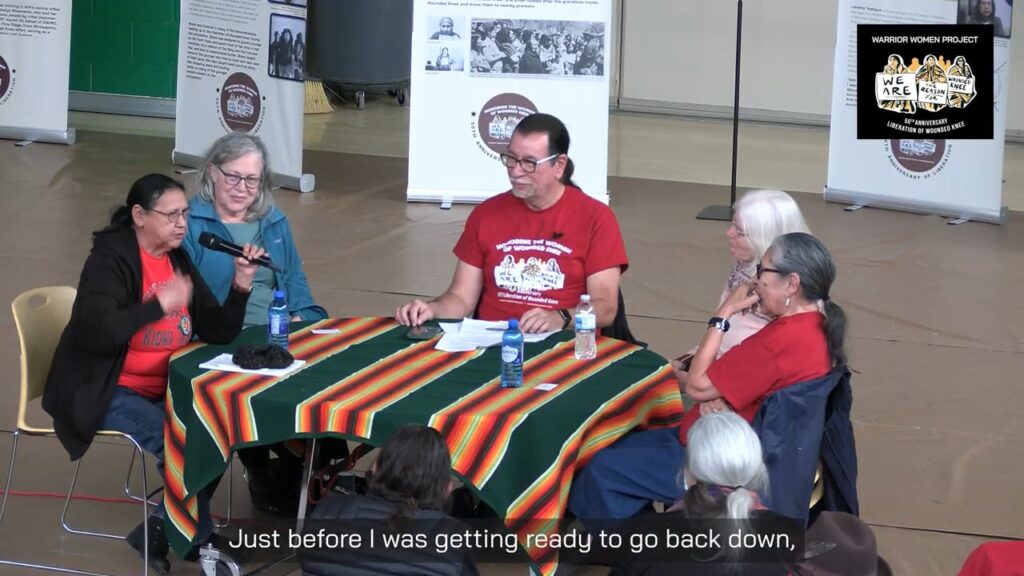
Lavetta Yeahquo | Wounded Knee ’73
Posted inWounded Knee '73

Lavetta Yeahquo | Wounded Knee ’73

https://vimeo.com/968492350?share=copy#t=0
Read More
Posted by Lavetta Yeahquo
Lavetta Yeahquo: Wounded Knee ’73 Occupation Day
Posted inWounded Knee '73

Lavetta Yeahquo: Wounded Knee ’73 Occupation Day

Read More
Posted by Lavetta Yeahquo

American Indian Movement (AIM) (9) International Indian Treaty Council (IITC) (1) Occupation of Alcatraz (1) Survival School (8) Teachings For Our Times (3) Uncategorized (9) Warrior Women Project (8) Women of All Red Nations (WARN) (8) Women of the Red Power Movement (5) Wounded Knee '73 (31)

All My Relations (Mitákuye Oyás’iŋ) (1) Boarding Schools (3) Ceremony & Spirituality (1) Community Organizing (24) Cultural Survival (17) Environmental Justice (4) Honoring (13) Indigenous Sovereignty (14) Intergenerational Knowledge (17) International Solidarity (2) Language & Storytelling (5) Legacy (7) Methodology (2) Organizing (1) Political Prisoners (1) Spirituality (1) State Surveillance & Repression (2) Teachings For Our Times (9) Treaties & Treaty Rights (1) United Nations Advocacy (1) Violence Against Indigenous Women (7) Youth Organizing (3)

Copyright 2026 — WARRIOR WOMEN PROJECT. All rights reserved.
Scroll to Top
Terms of Use

By accessing this site, you agree to the following terms. If you do not agree, please exit the site.

This archive is maintained by the Warrior Women Project (WWP), a fiscally sponsored 501(c)(3) project. All materials on this site — including video interviews, audio recordings, photographs, and written content — are protected by U.S. and international copyright laws. Copyright to these materials is jointly held by the narrators and the Warrior Women Project.

Users may view and share materials for personal or educational, non‑commercial use only. You may not alter or republish any material without prior written permission from WWP. All authorized use must contain WWP copyright notices in the materials.

We invite educators, students, and community members to activate this archive in classrooms, study groups, and public dialogue. For expanded educational use, resources, or permission guidance, contact us at info@warriorwomen.org — and please report back to let us know how you’re using it!

© 2025 Warrior Women Project and Narrators. All rights reserved. For educational use, contact info@warriorwomen.org for permissions and guidance.

User Agreement

Terms of Use

By accessing this site, you agree to the following terms. If you do not agree, please exit the site.

The Warrior Women Archive is is a WORK IN PROGRESS being developed by the Warrior Women Project (WWP). All materials on this site — including video interviews, audio recordings, photographs, and written content — are protected by U.S. and international copyright laws. Copyright to these materials is jointly held by the narrators and the Warrior Women Project.

Users may view and share materials for personal or educational, non-commercial use only. You may not alter or republish any material for without prior written permission from WWP. All  authorized use must contain WWP copyright notices in the materials.

We invite educators, students, and community members to activate this archive in classrooms, study groups, and public dialogue. For expanded educational use, resources, or permission guidance, contact us at info@warriorwomen.org — and please report back to let us know how you’re using it!